Contents
- What Does SEO Mean for a Dental Practice?
- Benefits of SEO for a Dental Practice
- How to Get Started: 21 Steps
- 1. Claim and Optimise Your Local Presence
- 2. Build Pages Google Can Rank
- 3. Earn Topical Authority
- 4. Fix the Technical Foundation
- 5. Stay Compliant and Track Patients
- Dental SEO Mistakes to Avoid
- 90-Day Dental SEO Plan
- Cost, Timeline, Agencies & FAQs
- Rankixa Services & Pricing
- 1Your Dental Practice4.9 (128) · DentistDentist · Open now
- 2High Street Dental Care4.6 (74) · DentistDental clinic · Closes 5 pm
- 3Parkside Dental Studio4.4 (39) · DentistCosmetic dentist · Closes 6 pm
SEO for dentists is the work of making a dental practice easy to find, and easy to trust, when someone searches Google for a dentist, a treatment or an emergency appointment near them.
Someone with a dental problem usually has a few immediate questions like:
- Is there a dentist near me taking on new patients?
- Can I get an emergency appointment today?
- What will this treatment cost, and can I spread the payment?
- Is this practice any good, and who would actually treat me?
A patient cannot judge clinical skill from a website, so they judge the practice instead. They search Google, read the first few results and the map listings, scan the reviews, look for a price, and ring the practice that looks established, local and open. A practice that is not in those results does not get the call.
Dental search in the UK has a second layer that general local SEO guides miss. Access to NHS dentistry is constrained, so a large share of searches are registration searches from people who cannot get an NHS place and are deciding whether to go private. At the same time, dental advertising is regulated: the General Dental Council sets out what a practice website must display and what claims it must not make. Copy that ranks and breaches that guidance is a liability, not a win.
This guide is written for UK dental practice owners, practice managers and small dental groups, from a squat practice in its first year to a five-site group. It sets out 21 steps in the order that produces new patient enquiries fastest, and it says plainly which steps are regulatory obligations rather than optional optimisations.
What Does SEO Mean for a Dental Practice?
SEO for dentists, also called dental SEO, is the process of optimising a dental practice’s website, Google Business Profile and online listings so that people searching for a dentist or a dental treatment in a specific area find that practice first. A Google Business Profile is the free listing that places a business in Google Maps and in local search results.
Dental SEO covers three connected jobs. Local SEO puts the practice in the map results for the towns it draws patients from. On-page SEO gives each treatment, each clinician and each location its own page. Off-page SEO earns the reviews, listings and links that show Google the practice is established and real.
A dental practice competes on three surfaces at once, and they are three separate competitions. The map results reward proximity, categories and reviews. The organic results reward page-level relevance and authority. AI answers reward factual consistency across the website, the profile and the directories. A practice ranking first in the map pack can still be absent from an AI answer about the same treatment.
Google states that local results are based mainly on three factors, listed below:
- Relevance: how closely the profile and the pages match what was searched for.
- Distance: how near the practice is to the searcher, or to the area they named.
- Prominence: how well known the practice is, which reviews, links and listings influence.
Google also states that a business cannot pay for a better local ranking. Every step in this guide improves at least one of those three factors.
Sources: Google: how local ranking works
What Do Patients Search for Before They Book?
Patients search with one of five intents: emergency, registration, general, treatment or research, and each intent needs a different page.
Emergency and registration searches convert fastest, because the patient has decided to act and only needs to find somewhere that will see them. Treatment searches convert biggest, because they lead to implants, aligners and cosmetic work. Research searches convert slowest, and they build the authority that makes the other four rank.
The five intents, what each searcher needs and the page that answers them are listed below.
| Intent | Example searches | What the searcher needs | Page that answers |
|---|---|---|---|
| Emergency | emergency dentist near me; emergency dentist open now; toothache out of hours | A phone number and a believable answer on same-day availability | Google Business Profile and an emergency dentistry page |
| Registration | NHS dentist taking on new patients near me; private dentist [town]; register with a dentist [town] | A clear statement of whether the practice is accepting patients, and on what basis | A new patients page and the profile’s opening and booking details |
| General | dentist near me; dentist [town]; dentist open Saturday; nervous patient dentist | Proximity, opening hours, reviews and a named team | The home page, the team pages and the profile |
| Treatment | dental implants [town]; Invisalign [town]; composite bonding near me | Price guidance, the process, finance options and before-and-after work | A dedicated page for that treatment |
| Research | how much do dental implants cost; how long does Invisalign take | An honest, specific answer with a price range | A guide that links to the treatment page |
How Does Dental SEO Differ from General Local SEO?
Dental SEO differs from general local SEO in four ways: the content is health content, the advertising is regulated, a patient registers once and returns for years, and NHS and private demand behave differently.
Those four differences change what a dental website has to do. Google treats health content as a subject where accuracy matters more than usual, so the clinician behind each page has to be visible. The General Dental Council sets requirements for what the site displays and limits on what it claims. And because one registration produces years of appointments, the arithmetic that justifies the work is lifetime value, not the value of a single visit.
| Difference | What it means for the practice | What to build |
|---|---|---|
| Dental content is health content | Anonymous clinical copy is a ranking and trust problem | Named clinicians with GDC numbers, qualifications and review dates on every clinical page |
| Dental advertising is regulated | Ranking copy has to be accurate and not misleading, and some words are restricted | A copy audit against GDC advertising guidance before anything is published |
| A patient registers once and returns | One enquiry is worth years of appointments, not one appointment | Pages aimed at registration and plan sign-up, not only at single treatments |
| NHS and private demand differ | The same site serves people who want an NHS place and people ready to pay privately | Separate NHS and private paths with accurate availability wording |
What Are the Benefits of SEO for a Dental Practice?
The benefits of SEO for a dental practice follow from appearing where patients already search before they book. There are 7 main benefits.
- More new patient registrations: Ranking in the map results and the organic results puts the practice in front of people actively looking for a dentist in the area it draws from, including those who cannot find an NHS place nearby.
- Higher-intent enquiries: Someone typing “emergency dentist near me” or “dental implants [town]” has already decided to act. Search traffic arrives with a problem to solve, which is why it converts better than interruption advertising.
- More high-value treatment consultations: A practice chooses what to build pages for, so implants, clear aligners and cosmetic work get dedicated pages instead of being buried in one list of services.
- Recurring rather than one-off revenue: A registered patient returns for check-ups and hygiene visits, and many join a membership plan. An enquiry that becomes a plan patient produces monthly revenue for years, not a single transaction.
- Earlier patient trust: Reviews, named clinicians, GDC registration numbers, CQC registration and published fee ranges answer “is this practice any good?” before the phone rings, which shortens the decision.
- Less dependence on paid advertising: Organic clicks carry no per-click charge. Paid search stops producing the day the budget stops, while rankings keep producing enquiries between campaigns.
- Fewer gaps in the diary: Steady enquiry volume fills hygienist slots and consultation appointments that would otherwise go unused, which is where chair time is most often lost.
Together, these benefits turn a practice website from an online brochure into a source of booked appointments.
How Does a Dental Practice Get Started with SEO? 21 Steps
A dental SEO strategy has five parts: local presence, pages Google can rank, topical authority, the technical foundation, and compliance and tracking. The 21 steps below follow that order. Steps 1 to 10 deliver the fastest return, and steps 19 to 21 are the ones most often skipped.
Part 1
Claim and Optimise Your Local Presence
Steps 1 to 5 cover the Google Business Profile, which decides whether the practice appears in the map results for “dentist near me”. This is the fastest-moving part of dental SEO, and it costs nothing but attention.
1. Claim and verify your Google Business Profile
Claim and verify the practice’s Google Business Profile before anything else, because an unverified or unclaimed profile cannot rank in the map results and cannot be edited by the practice.
Verification ties the listing to a real address Google has checked. Until it completes, anyone can suggest edits to the practice’s name, hours and phone number, and those edits go live without the owner seeing them. Practices that have moved, rebranded or changed owner often have two or three listings competing with each other, and duplicates split reviews and rankings between them.
The checks to run on the profile first are listed below:
- One listing per site: search the practice name and the address and report duplicates for removal.
- Name as it appears on the signage: no added towns or treatments, which Google’s guidelines prohibit.
- Address and map pin: confirm the pin sits on the building, not on the street or a neighbouring unit.
- Primary phone number: the number the front desk actually answers, not a diverted mobile.
- Ownership: the profile is owned by a practice email address, not a former marketing agency.
Sources: Google Business Profile: representing your business
2. Choose the right primary and secondary categories
Set the primary category to the one treatment focus the practice most wants to be found for, because the primary category carries more weight in the map results than any other profile field.
Google offers several dental categories, and they do not compete equally. A general practice that also places implants ranks differently depending on which it chooses as primary. Secondary categories extend reach without diluting the primary, so a practice adds the services it genuinely provides and leaves off the ones it refers out.
The dental categories worth considering are listed below:
- Dentist: the default primary for a general practice, and the category most “dentist near me” searches map to.
- Dental clinic: an alternative primary for a larger, multi-surgery or multi-clinician site.
- Cosmetic dentist: a strong primary for a practice whose growth comes from bonding, veneers and whitening.
- Dental implants periodontist: a secondary for a practice that places implants in-house.
- Orthodontist: a secondary where aligners and braces are provided by a clinician on the GDC specialist list.
- Emergency dental service: a secondary only where the practice genuinely offers same-day emergency appointments.
3. Build your services list from treatment names
Fill the profile’s services list with the treatment names patients actually search for, because those entries give Google additional relevance signals beyond the category.
Most practices leave this section empty or add three generic entries. A complete list names every treatment provided, in patient language rather than clinical language. “Teeth straightening” and “clear aligners” belong alongside “orthodontics”, and “tooth replacement” belongs alongside “dental implants”, because patients use both registers.
The services to enter, grouped by how they are searched, are listed below:
- Registration and routine: new patient examination, check-up, hygienist appointment, scale and polish, children’s dentistry.
- Urgent: emergency dental appointment, toothache treatment, broken tooth repair, extraction.
- Restorative: white fillings, crowns, bridges, dentures, root canal treatment.
- Cosmetic: teeth whitening, composite bonding, veneers, smile makeover.
- Implants and orthodontics: dental implants, implant bridge, full-arch implants, clear aligners, fixed braces.
4. Add booking links, opening hours and emergency availability
Add a booking link and accurate hours to the profile, because a patient searching at 8pm on a Sunday decides between practices on whether one of them appears open or bookable.
Hours that are wrong cost more than hours that are restrictive. Google shows “Open now” and “Closes 5pm” directly in the map results, and a patient who travels to a closed practice leaves a review about it. Special hours matter most: bank holidays, the Christmas period and any emergency or on-call arrangement need entering in advance rather than being handled by a voicemail message.
The profile fields that change whether a patient rings are listed below:
- Regular hours: including early, late and Saturday sessions, entered per day rather than as a single range.
- Special hours: bank holidays and the Christmas and New Year period, set before they arrive.
- Booking link: pointing at the practice’s own booking page or new patient form, not the home page.
- Appointment attributes: whether the practice is accepting new patients, and whether it offers online or same-day appointments.
- Accessibility and practical attributes: parking, wheelchair access and languages spoken, each of which patients filter on.
5. Build review volume without breaching patient confidentiality
Build a steady flow of Google reviews, and reply to them without confirming that the reviewer was a patient, because patient confidentiality applies to a public reply just as it does to any other disclosure.
Review volume, recency and response rate all influence prominence, which is one of the three local ranking factors. But the standard advice to “thank the patient for visiting” does not work in dentistry. A reply that says “thanks for coming in on Tuesday” confirms to every reader that the person received care at the practice. Replies therefore stay general: they thank the reviewer for the feedback, state the practice’s position, and move anything specific to a private channel.
A review process that holds up is listed below:
- Ask in person, at the right moment: the end of a completed course of treatment, by the clinician or treatment coordinator, not by a bulk email.
- Make the link one tap: use the profile’s short review link on a card, a text message or the practice’s own follow-up.
- Never incentivise: offering anything in exchange for a review breaches Google’s policies and undermines the accuracy the GDC requires of practice information.
- Reply to every review within a week: briefly, in general terms, without referring to treatment, attendance or clinical detail.
- Handle complaints off-platform: acknowledge, give the complaints procedure, and invite direct contact. Do not debate the facts in public.

Sources: Google: prohibited and restricted content for reviews, GDC: guidance on advertising
Part 2
Build Pages Google Can Rank
Steps 6 to 10 cover the website itself. A practice cannot rank for a treatment it has no page for, and most dental sites have one page where they need fifteen.
6. Map every treatment to real search demand
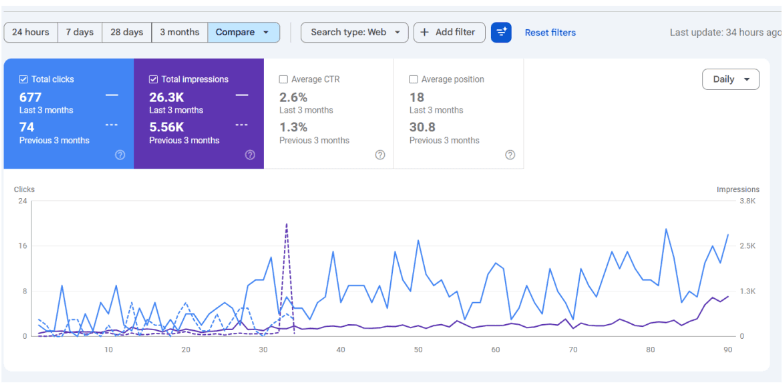
Build the keyword list from the practice’s own data first, because Search Console and the Google Business Profile already record what people searched before they arrived.
Keyword tools give volume. The practice’s own records give intent that converts. The enquiry log, the phone system and the treatment coordinator’s notes show which treatments people ring about and in what words, and those words belong in the page headings. Only after that is exhausted do external tools add the terms the practice is missing entirely.
The sources to work through, in order, are listed below:
- Search Console queries: the searches the site already appears for, including the ones it ranks badly for, which are the quickest wins.
- Google Business Profile performance: the searches that produced map impressions, calls and direction requests.
- The enquiry log and call records: the exact words patients use when they ring, which rarely match clinical terminology.
- Google autocomplete and People Also Ask: free, current and specific to the UK if searched from the practice’s location.
- A keyword tool: Keyword Planner, Ahrefs or Semrush, used last, to find demand the practice has no visibility for at all.
7. Give each treatment its own page
Build one page per treatment rather than one page listing all of them, because a single services page cannot rank for implants, aligners, bonding and whitening at the same time.
This is the highest-impact change on most dental websites. A page that covers one treatment can answer that treatment’s questions in full, carry its price range, show its before-and-after work and name the clinician who provides it. A page covering twelve treatments does none of that for any of them, and it competes with itself for every term.
What a treatment page needs in order to rank and convert is listed below:
- A direct opening answer: what the treatment is, in two sentences, before any marketing copy.
- Suitability: who the treatment suits and who it does not, which pre-qualifies enquiries.
- The process: what happens at each appointment and how many appointments are involved.
- A price range and finance: a genuine range with what moves it, plus the finance options available.
- Evidence: before-and-after images of the practice’s own work, with consent in place.
- The clinician: who provides it, with their GDC registration number and qualification.
- Treatment-specific questions: the questions patients actually ask about that treatment, answered directly.
- One clear action: a consultation booking, with a phone number visible without scrolling on mobile.
8. Publish your fees and price ranges
Publish a fees page with genuine price ranges, because “dental implants cost UK” and “Invisalign cost” are among the highest-volume treatment searches and a practice with no price cannot answer them.
Practices withhold prices to protect the consultation, and it costs them enquiries. A patient comparing four websites discards the ones that will not say. A range with an explanation of what moves it, such as the number of implants or the complexity of the case, pre-qualifies the enquiry instead of losing it. Published fees also have to be accurate and kept current, because GDC guidance requires practice information to be accurate and not misleading.
A fees page that works contains the items listed below:
- A range per treatment: from and to, not a single figure, with the factors that move the price named.
- What is included: consultations, scans, follow-ups and any guarantee or aftercare period.
- NHS charge bands where applicable: stated separately from private fees so the two are never confused.
- Finance options: the provider used and the terms available, without implying approval is automatic.
- A last-updated date: so the page is visibly current and stays accurate.
Sources: NHS: dental treatment charge bands
9. Create a page for every clinician
Give every dentist, hygienist and therapist their own page, because GDC guidance requires registration details to be displayed for any dental professional named on the site as providing care, and because patients search clinicians by name.
This step satisfies a regulatory obligation and a ranking opportunity at the same time. The GDC’s advertising guidance states that a dental professional mentioned on a website as providing dental care must display their GDC registration number, their professional qualification and the country from which that qualification was obtained. A page built around that requirement also gives Google a named, credentialled author to attach to clinical content, and it captures searches for the clinician’s own name, which are among the highest-converting queries a practice receives.
What belongs on a clinician page is listed below:
- Full name and role: as registered, with the role stated plainly: principal dentist, associate dentist, hygienist, therapist.
- GDC registration number: displayed, as the guidance requires.
- Qualification and country of qualification: both, as the guidance requires.
- Year qualified and areas of focus: described as a special interest unless the clinician is on a GDC specialist list.
- Memberships and accreditations: named bodies only, with no comparison to other clinicians.
- A photograph and the treatments they provide: linked to the relevant treatment pages.
Sources: GDC: guidance on advertising
10. Separate your NHS and private paths
Give NHS and private care separate pages and separate wording, because the two attract different searches and conflating them misleads patients about what is available.
A mixed practice receives two distinct kinds of registration search. One group is looking for an NHS place. The other has given up on finding one and is deciding whether to go private. A single “new patients” page that implies NHS availability the practice does not have produces wasted calls, poor reviews and a statement on the website that is not accurate. Separate paths let each page say exactly what is true, including “we are not currently accepting new NHS patients”, which is a more useful answer than silence.
The structure that handles both without misleading anyone is listed below:
- A private new patients page: fees, what the examination includes, membership plan options and current availability.
- An NHS page: charge bands, who the practice can see under its NHS arrangement, and the current position on new NHS registrations.
- An honest availability statement on both: dated, and updated when it changes.
- A membership plan page: what the plan covers and what it costs monthly, since this is where private registrations are won.
- Profile alignment: the Google Business Profile’s services and new patient attributes matching what the pages say.
Earn Topical Authority
Steps 11 to 15 build the depth that makes treatment pages rank. Google rewards a site that covers a subject completely over one that mentions it once.

11. Build a topic cluster around each treatment
Surround each treatment page with articles answering that treatment’s questions, and link them to the treatment page, because depth on one subject is what moves a competitive treatment term.
A treatment page alone rarely outranks an established competitor. A treatment page supported by eight articles covering cost, process, alternatives, recovery, suitability and comparisons signals that the practice covers the subject properly. Each article targets a research query, and each links to the treatment page it supports, so the authority accumulates in one place rather than spreading thin.
The cluster shape that works for any treatment is listed below:
- Cost: how much it costs in the UK, what moves the price, and what finance is available.
- Process: what happens at each stage and how long the whole course takes.
- Alternatives: the other options for the same problem, described fairly, including doing nothing.
- Suitability: who the treatment suits, and the circumstances in which it is not recommended.
- Recovery and aftercare: what to expect afterwards and how long it lasts.
- Comparisons: the direct comparisons patients search for, such as aligners against fixed braces.
12. Answer the cost and comparison questions
Prioritise cost and comparison articles over general dental health posts, because cost and comparison queries come from people choosing where to spend money and general health posts come from people who are not.
Most dental blogs are filled with brushing advice that attracts no one who will ever book. The queries worth writing for are the ones a patient runs while deciding: how much a treatment costs, how two treatments compare, and whether a treatment is worth it. These articles rank, they are cited in AI answers because they contain specific facts, and they bring readers who are already in the market.
The article types that produce enquiries are listed below:
- Cost articles: “How much do dental implants cost in the UK?” with a real range and the factors behind it.
- Comparison articles: “Clear aligners or fixed braces?” covering duration, visibility, cost and suitability.
- Worth-it articles: “Is composite bonding worth it?” answered honestly, including the downsides.
- Duration articles: “How long does Invisalign take?” with a range and what extends it.
- Problem-first articles: “What to do about a cracked tooth”, which catch urgent searches that have not yet named a treatment.
13. Get clinician review on every clinical page
Have a named, GDC-registered clinician review every page that makes a clinical statement, and show that review on the page, because Google applies a higher accuracy bar to health content than to other subjects.
Google’s own guidance on creating helpful content asks who produced the content, how it was produced and why, and whether it demonstrates first-hand expertise. For dental content, the answer has to be a real clinician. A review line naming the dentist, their GDC number and the date they checked the page satisfies that question, and it satisfies the GDC requirement that practice information is accurate at the same time.
What a review line needs in order to carry weight is listed below:
- A named clinician: not “our clinical team”, which is unverifiable and signals nothing.
- Their GDC registration number: which makes the claim checkable against the public register.
- The date of review: and a process for re-reviewing when guidance or fees change.
- A link to their clinician page: so the credentials sit one click away.
- Sources for clinical claims: linked to the primary source rather than to another practice’s blog.
Sources: Google: creating helpful, reliable, people-first content
14. Publish before-and-after galleries correctly
Publish before-and-after images of the practice’s own completed work, with documented patient consent and no retouching, because they convert better than any copy on a cosmetic treatment page.
A patient considering bonding or implants wants to see outcomes. Images of the practice’s own cases do that in a way text cannot, and they bring image-search traffic and longer page engagement with them. The constraints are real: consent has to be documented and specific to publication, images have to represent the actual result without enhancement, and the accompanying claim has to be accurate rather than a promise of the same outcome for the reader.
The requirements for publishing case images are listed below:
- Documented consent to publish: specific to the website and any other channel the images will appear on, and withdrawable.
- Unretouched images: consistent lighting and angle, with no enhancement of the result.
- Accurate accompanying text: what was done, over how long, by whom, with no implication of a guaranteed outcome.
- Compressed, correctly sized files: because unoptimised galleries are the most common cause of a slow dental website.
- Descriptive alt text: naming the treatment, which is how these images earn image-search traffic.
15. Earn local and dental links
Earn links from local organisations, dental bodies and suppliers rather than buying link packages, because prominence is a local ranking factor and bought links create a liability the practice then has to undo.
Dental practices have more legitimate link opportunities than most local businesses, and almost none of them involve an SEO. Sponsorship, local press, membership bodies, supplier case studies and the practice’s own community involvement all produce links that are genuinely earned. Each one also produces a citation, which matters as much as the link.
The link sources available to a UK practice are listed below:
- Membership and accreditation bodies: the British Dental Association and the accreditation bodies relevant to the practice’s treatments.
- Treatment provider directories: manufacturer and provider locators for the systems the practice genuinely uses.
- Local sponsorship: schools, sports clubs and community events, which carry a link and local relevance together.
- Local press and radio: practice news, a new clinician, an anniversary, a charity initiative.
- Suppliers and partners: laboratories, equipment manufacturers and finance providers that publish customer stories.
- The Chamber of Commerce and council directories: low-value individually, but part of a consistent citation profile.
Part 4
Fix the Technical Foundation
Steps 16 to 18 make sure Google can crawl, understand and rank what has been built, and that the site is fast enough for an urgent mobile search.
16. Fix crawling, indexing and site speed
Confirm that every page the practice wants to rank is indexed, and that the site loads quickly on a mobile connection, because an unindexed page cannot rank at any level of optimisation.
Dental sites fail on speed more often than on anything else, and the causes are consistent: a full-screen hero video, before-and-after galleries uploaded straight from a camera, a chat widget, a booking widget and several tracking scripts. Core Web Vitals measure what the patient experiences, and the images are almost always the largest single cost.
The technical checks to run are listed below:
- Index coverage: every treatment, clinician and location page present in Search Console, with no unintended exclusions.
- Core Web Vitals: largest contentful paint, interaction to next paint and cumulative layout shift measured on real mobile data.
- Image weight: galleries compressed and correctly sized, which usually recovers more than every other fix combined.
- Third-party scripts: chat, booking and analytics audited, with anything unused removed.
- One canonical version: HTTPS, one domain, and no duplicate pages competing for the same treatment term.
- Pages that should not be indexed: thank-you pages, internal search results and old campaign landing pages excluded.
Sources: web.dev: Core Web Vitals
17. Make the site mobile and tap-to-call ready
Build the site so that a patient in pain, on a phone, can call within one tap, because urgent dental searches are overwhelmingly mobile and the first practice that is easy to ring wins the appointment.
Google indexes the mobile version of a site, so the mobile experience is the site as far as rankings are concerned. For dentistry the standard is higher than general usability: someone with toothache will not navigate a menu, scroll past a hero banner or complete a nine-field form. The number has to be visible immediately and the form has to be short.
The mobile requirements for a dental site are listed below:
- A visible phone number without scrolling: as a working tel: link, not an image.
- A sticky call action on treatment and emergency pages: present throughout the scroll.
- Short forms: name, phone number and the reason for contact. Every additional field reduces completions.
- Tap targets and legible text: sized for a thumb, with no pinch-zooming to read a fee.
- No interstitial pop-up on arrival: which costs rankings and enquiries at the same time.
- An emergency path from the home page: reachable in one tap.
18. Add Dentist schema and treatment markup
Mark the practice up with the Dentist schema type rather than generic LocalBusiness, because Dentist carries dental-specific properties that LocalBusiness does not have.
Schema.org defines Dentist as a type with parent chains through both LocalBusiness and MedicalOrganization, which means it inherits properties neither a plain business listing nor a medical organisation alone provides. Two matter most for a UK practice: isAcceptingNewPatients, which states directly whether the practice is taking registrations, and medicalSpecialty. Almost every dental site in the UK uses LocalBusiness and leaves those fields unused.
The markup to implement, and what each part does, is listed below:
- Dentist as the main type: with name, address, geo coordinates, telephone, url, image and opening hours specification.
- isAcceptingNewPatients: stating the practice’s current registration position in machine-readable form.
- medicalSpecialty: declaring the practice’s clinical focus.
- makesOffer with MedicalProcedure: one entry per treatment, which connects the treatment pages to the practice entity.
- employee with Person and hasCredential: carrying each clinician’s GDC registration and qualification.
- sameAs: pointing at the corroborating records: the Google Business Profile, the CQC provider page, the NHS.uk listing and the practice’s social profiles.
- aggregateRating: only where the practice displays real, verifiable reviews on the page it marks up.
{
  "@context": "https://schema.org",
  "@type": "Dentist",
  "@id": "https://www.yourdentalpractice.co.uk/#practice",
  "name": "Your Dental Practice",
  "url": "https://www.yourdentalpractice.co.uk/",
  "image": "https://www.yourdentalpractice.co.uk/images/practice.jpg",
  "telephone": "+44 20 7946 0000",
  "email": "reception@yourdentalpractice.co.uk",
  "priceRange": "££",
  "currenciesAccepted": "GBP",
  "paymentAccepted": "Cash, Credit Card, Debit Card, Patient finance",
  "address": {
    "@type": "PostalAddress",
    "streetAddress": "12 High Street",
    "addressLocality": "Croydon",
    "addressRegion": "London",
    "postalCode": "CR0 1AB",
    "addressCountry": "GB"
  },
  "geo": {
    "@type": "GeoCoordinates",
    "latitude": 51.3762,
    "longitude": -0.0982
  },
  "hasMap": "https://maps.google.com/?cid=YOUR_PROFILE_CID",
  "areaServed": [
    { "@type": "City", "name": "Croydon" },
    { "@type": "City", "name": "Purley" }
  ],
  "medicalSpecialty": "https://schema.org/Dentistry",
  "isAcceptingNewPatients": true,
  "openingHoursSpecification": [
    {
      "@type": "OpeningHoursSpecification",
      "dayOfWeek": ["Monday", "Tuesday", "Wednesday", "Thursday"],
      "opens": "08:30",
      "closes": "17:30"
    },
    {
      "@type": "OpeningHoursSpecification",
      "dayOfWeek": "Friday",
      "opens": "08:30",
      "closes": "16:00"
    },
    {
      "@type": "OpeningHoursSpecification",
      "dayOfWeek": "Saturday",
      "opens": "09:00",
      "closes": "13:00"
    }
  ],
  "makesOffer": [
    {
      "@type": "Offer",
      "url": "https://www.yourdentalpractice.co.uk/treatments/dental-implants",
      "itemOffered": {
        "@type": "MedicalProcedure",
        "name": "Dental implants",
        "procedureType": "https://schema.org/SurgicalProcedure"
      }
    },
    {
      "@type": "Offer",
      "url": "https://www.yourdentalpractice.co.uk/treatments/clear-aligners",
      "itemOffered": {
        "@type": "MedicalProcedure",
        "name": "Clear aligners"
      }
    },
    {
      "@type": "Offer",
      "url": "https://www.yourdentalpractice.co.uk/treatments/emergency-dentist",
      "itemOffered": {
        "@type": "MedicalProcedure",
        "name": "Emergency dental appointment"
      }
    }
  ],
  "employee": [
    {
      "@type": "Person",
      "name": "Dr A. Example",
      "jobTitle": "Principal Dentist",
      "url": "https://www.yourdentalpractice.co.uk/team/a-example",
      "hasCredential": [
        {
          "@type": "EducationalOccupationalCredential",
          "credentialCategory": "GDC registration",
          "identifier": "123456",
          "recognizedBy": {
            "@type": "Organization",
            "name": "General Dental Council",
            "url": "https://www.gdc-uk.org/"
          }
        },
        {
          "@type": "EducationalOccupationalCredential",
          "credentialCategory": "degree",
          "name": "BDS",
          "educationalLevel": "Bachelor of Dental Surgery",
          "recognizedBy": {
            "@type": "CollegeOrUniversity",
            "name": "University of Example",
            "address": { "@type": "PostalAddress", "addressCountry": "GB" }
          }
        }
      ]
    }
  ],
  "sameAs": [
    "https://www.google.com/maps/place/?q=place_id:YOUR_PLACE_ID",
    "https://www.cqc.org.uk/location/YOUR-CQC-LOCATION-ID",
    "https://www.nhs.uk/services/dentist/your-practice/YOUR-NHS-ID",
    "https://www.facebook.com/yourdentalpractice",
    "https://www.instagram.com/yourdentalpractice"
  ]
}Sources: Schema.org: Dentist, Google: local business structured data
Part 5
Stay Compliant and Track Patients
Steps 19 to 21 protect the practice and prove the work. These are the steps most often skipped, and the ones that most often decide whether dental SEO produces a measurable return.
19. Audit your copy against GDC advertising rules
Audit the whole site against the General Dental Council’s advertising guidance before publishing anything new, because a page-one ranking built on a non-compliant claim is a complaint waiting to be made.
The GDC requires that any advertising or promotional material a dental professional produces is accurate and not misleading, and it sets out specific requirements for practice websites. Several of the phrases that fill dental marketing copy fall foul of it. “The best dentist in [town]”, “specialist” used by a clinician who is not on a GDC specialist list, guaranteed outcomes, and comparisons between one clinician’s skills and another’s are all problems. Replacing them is straightforward, and the compliant version usually reads as more credible.
Common dental marketing phrases, the problem with each and a compliant rewrite are listed below.
| Risky phrasing | Why it is a problem | Compliant rewrite |
|---|---|---|
| Best dentist in Surrey | An unsubstantiated superlative; advertising has to be accurate and not misleading | Private dental care in Surrey, with [n] Google reviews |
| Implant specialist | “Specialist” is restricted to clinicians on a GDC specialist list | Dentist with a special interest in dental implants |
| Smile specialist | Specifically identified in GDC guidance as potentially misleading | Cosmetic dentistry, provided by [name], GDC [number] |
| Guaranteed results | A clinical outcome cannot be guaranteed | What the treatment involves, typical outcomes and the aftercare included |
| More experienced than other local dentists | Comparing one professional's skills or qualifications with another's is restricted | Qualified in [year], with [n] years providing this treatment |
| Painless dentistry | An absolute claim about individual experience | Sedation and anxiety management available for nervous patients |
| Thanks for visiting us on Tuesday (review reply) | Confirms the reviewer received care, which breaches confidentiality | Thank you for your feedback. Please contact the practice to discuss anything directly |
| Award-winning practice | Needs the award named and verifiable to be accurate | [Award name], [awarding body], [year] |
The same audit covers what the site has to display, not only what it must avoid. GDC guidance states that a practice website shows the practice name and geographic address, contact details, the GDC’s contact details or a link to the GDC website, information about the complaints procedure including who to contact if the patient is not satisfied with the response, and the date the site was last updated. For private treatment the complaints route named is the Dental Complaints Service; for NHS treatment it is the relevant NHS body.
Sources: GDC: guidance on advertising, GDC: Standards for the Dental Team
20. Set up call and enquiry tracking
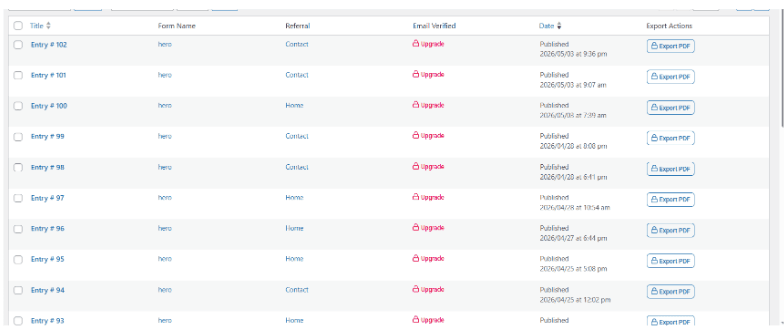
Track calls, form submissions and booking requests as separate events before the SEO work starts, because rankings and traffic do not tell a practice owner whether the investment produced patients.
Most dental SEO reporting shows positions and sessions, which is the wrong level. The numbers a principal needs are enquiries received, consultations booked, patients registered and treatment value won. Those require tracking set up at the start, so there is a baseline to compare against, and they require the practice management system to be part of the picture rather than the analytics alone.
The tracking stack that answers the question properly is listed below:
- Search Console: queries, impressions and clicks, which show what the site is being found for.
- Analytics events: separate events for each form, each tap-to-call and each booking link, not a single generic conversion.
- Call tracking: a tracked number so calls from search are distinguishable from calls from signage and referrals.
- A source question at the front desk: asked and recorded on every new patient, because it catches what tracking misses.
- The practice management system: as the source of truth for registrations and treatment value.
21. Close the front-desk gap
Fix how enquiries are answered before scaling the work that creates them, because ranking first and not answering the phone converts a traffic gain into a lost patient and a bad review.
This is the step that decides whether dental SEO pays, and it sits outside the website entirely. A practice at full capacity during surgery hours misses calls at exactly the times patients search: early morning, lunchtime and evening. Those callers do not leave voicemails; they ring the next practice in the map results. The same applies to form enquiries left until the end of the day.
The checks that recover enquiries already being paid for are listed below:
- Measure the missed-call rate: by hour and by day. Most practices have never looked, and the pattern is consistent.
- Cover the peaks: early morning, lunchtime and the hour after closing, with a person or an answering service.
- Set a response time for form enquiries: measured in minutes during opening hours, not hours.
- Script the new patient call: so the person answering can register a patient or book a consultation without passing it on.
- Follow up unconverted enquiries: once, by phone, within 48 hours.
Dental SEO works as a sequence. These 21 steps take a practice from an unclaimed profile and a single page of services to a site that produces registration and treatment enquiries every week, without making a claim that breaches GDC advertising guidance.
Which Dental SEO Mistakes Keep Practices Off Page One?
The mistakes that keep dental practices off page one are structural rather than technical, and most of them are visible from the home page. There are 9 common ones.
- One services page instead of a page per treatment: A single page listing twelve treatments competes with itself for every term and ranks for none of them properly. This is the most common and most expensive mistake on dental websites.
- An unclaimed profile, or the wrong primary category: An unverified Google Business Profile cannot rank in the map results, and a primary category that does not match the practice’s focus caps how far it can climb.
- Review replies that breach patient confidentiality: Thanking a reviewer for their visit confirms publicly that they received care. The standard review advice in general SEO guides is not safe to follow in dentistry.
- Before-and-after galleries that slow the site down: Uncompressed case photography is the single largest cause of poor Core Web Vitals on dental sites, and it costs rankings on the pages that convert best.
- Anonymous clinical content: Pages making clinical statements with no named clinician and no GDC registration number fail both Google’s expectations for health content and the GDC’s display requirements.
- Non-compliant claims in titles and headings: “Best”, “#1”, “specialist” used without GDC specialist registration, and guaranteed outcomes expose the practice while adding nothing a compliant alternative could not say.
- Chasing “dentist near me” and ignoring treatment searches: Generic searches are the most contested and the least valuable. The implant, aligner and bonding searches that fund a practice are where the achievable gains are.
- Withholding prices: Cost queries are among the highest-volume dental searches. A site with no price range cannot answer them, and a patient comparing practices discards the one that will not say.
- Ranking well and not answering the phone: Enquiries generated outside the hours the front desk is covered are lost to the next practice in the results. No amount of further optimisation recovers them.
What Does a 90-Day Dental SEO Plan Look Like?
A 90-day dental SEO plan front-loads the work that moves fastest and costs least: the Google Business Profile, the compliance audit and tracking. Content and links follow once that foundation is in place.
| Phase | Action | Owner | Expected effect | How to verify |
|---|---|---|---|---|
| Days 1–30 | Claim and complete the Google Business Profile, set categories, services, hours and booking link | Practice manager | Map impressions and calls begin to rise | Profile performance report |
| Days 1–30 | Audit all site copy against GDC advertising guidance and fix non-compliant claims | Principal with the agency | Regulatory exposure removed before new pages are built | A completed copy audit, page by page |
| Days 1–30 | Set up call tracking and separate analytics events, and record the baseline | Agency | Every later result becomes measurable | A baseline report of enquiries and registrations |
| Days 1–30 | Technical audit: indexing, Core Web Vitals, image weight, duplicate pages | Agency | Existing pages become able to rank | Search Console coverage and a speed report |
| Days 31–60 | Build the first three treatment pages, chosen by fee value and search demand | Agency with clinical review | Visibility for treatment searches starts | Impressions for those treatment terms |
| Days 31–60 | Build clinician pages with GDC numbers, qualifications and treatments | Practice with the agency | Regulatory display requirement met and expertise signalled | Each clinician page published and linked |
| Days 31–60 | Separate the NHS and private paths with dated availability wording | Practice manager | Fewer wasted calls and clearer registration enquiries | Both pages live and consistent with the profile |
| Days 31–60 | Start the review process and reply to every existing review | Practice manager | Prominence improves, which lifts map ranking | Review count, recency and response rate |
| Days 31–60 | Build the UK citation set and fix NAP inconsistencies | Agency | Consistent entity data across the sources AI answers use | A citation audit showing matched details |
| Days 61–90 | Publish the first topic cluster around the highest-value treatment | Agency with clinical review | The treatment page begins to move on competitive terms | Rankings and impressions for the cluster |
| Days 61–90 | Implement Dentist schema, MedicalProcedure and clinician credentials | Agency | The practice is described unambiguously to search engines and AI | Rich Results Test and a schema validator |
| Days 61–90 | Earn the first local and dental links from real relationships | Practice with the agency | Authority grows beyond the website | Referring domains in Search Console |
| Days 61–90 | Review the missed-call rate and cover the peak hours | Practice manager | More of the existing enquiries convert | Call records by hour, before and after |
| Days 61–90 | First full measurement against the day-one baseline | Agency | The return becomes a number rather than an impression | Enquiries, consultations and registrations compared |

At 90 days a practice has a complete profile, compliant copy, the treatment pages that matter most, working tracking and the first cluster published. Competitive treatment terms generally move between months four and twelve, which is why the measurement set up on day one matters more than the rankings seen in week three.
What Should a Dental Practice Know Before Investing in SEO?
Before committing to dental SEO, a practice owner needs definitive answers on cost, timescale, return, the alternative of paid advertising, and how to tell a capable agency from a confident one. Each answer below is given as a range where no single figure is honest.
How Much Does Dental SEO Cost in the UK?
Dental SEO in the UK costs between £299 and £2,500 per month, depending on the number of locations, the competitiveness of the town, the number of treatment pages required and the condition of the existing website.
UK agencies that work only with dental practices publish retainers from around £1,300 to £2,500 per month. Generalist local SEO agencies, Rankixa among them, operate below that range. The figure matters less than what it covers: a £299 retainer that includes keyword research, on-page work, monthly content, link building and reporting delivers more than a £1,500 retainer that covers reporting and a monthly call.
What each tier of the UK market typically includes is set out below.
| Tier | Monthly range | Typically includes |
|---|---|---|
| Generalist local SEO agency | £299–£800 | Profile management, on-page work, monthly content, link building, ranking and enquiry reporting |
| Dental-only specialist agency | £1,300–£2,500 | The above plus dental-specific content, treatment page build-out and sector benchmarking |
| Freelance consultant | £400–£1,200 | Varies widely; usually strategy and audit with the practice executing |
| In-house | Salary cost | Full control and context, with the tool and expertise cost carried internally |
Rankixa publishes its prices in full: SEO at £299 per month, Google Business Profile management at £100 per month, Google Ads management at £150 per month plus the ad budget, and websites from £200 as a one-time cost.
How Long Does Dental SEO Take to Work?
Dental SEO takes 6 to 12 months to produce a stable increase in new patient enquiries, with the first measurable movement in 4 to 8 weeks.
The total breaks down by quarter. In the first quarter the Google Business Profile produces the earliest gains, because profile changes take effect within days and map impressions respond quickly. In the second quarter the treatment pages built in month two begin to rank, and enquiry volume becomes visible in the tracking. From the third quarter onward the topic clusters and links compound, and competitive treatment terms such as implants and aligners move.
Month by month, the practical expectation is profile and technical gains in month 1, the first treatment page rankings in months 2 and 3, consistent enquiry growth from month 4, and competitive treatment terms from month 6. A practice with an established site and an existing review base moves faster than a squat practice starting from nothing.
What Is the ROI of Dental SEO for a Dental Practice?
The return on dental SEO comes from two sources that compound: the lifetime value of each registered patient, and the fee value of the high-value treatments that search brings in.
A registered patient returns for examinations and hygiene appointments for years, and many join a membership plan that produces monthly revenue. That recurring value, rather than the value of a first appointment, is what a registration enquiry is worth. Separately, a single implant or clear aligner case carries a four-figure fee, so one case from organic search covers several months of any UK retainer in the range above.
The honest way to calculate it is with the practice’s own numbers rather than an industry average: the average value of a new registration over the time patients typically stay, the practice’s own fee for its highest-value treatment, and the conversion rate from enquiry to booked consultation that the tracking in step 20 produces. Any agency presenting a return figure without those three inputs is estimating.
Is SEO or Google Ads Better for a Dental Practice?
Neither is better in general: Google Ads produces enquiries immediately and stops producing them when the budget stops, and SEO takes months to build and keeps producing afterwards.
The practical answer depends on the practice’s position. A squat practice with no rankings and empty appointment books needs enquiries this month, which is Ads. An established practice with a full NHS list and a private side to grow benefits more from SEO, because the demand is already searching and the asset keeps its value. A practice launching an implant or aligner service runs Ads to test which messages convert, then builds the SEO pages around what worked.
The two channels compared on what matters to a practice owner are set out below.
| Factor | SEO | Google Ads |
|---|---|---|
| Time to first enquiry | 4 to 8 weeks | Days |
| Cost behaviour | Fixed monthly fee; cost per enquiry falls as rankings mature | Per-click; cost per enquiry stays roughly flat |
| What happens when you stop | Rankings decay slowly over months | Enquiries stop immediately |
| Best use | Registration, treatment and research searches | Emergency searches, new service launches, filling a gap this month |
| Asset ownership | The pages, profile and reviews remain the practice's | Nothing remains |
Most practices with budget for both run them together: Ads covers emergency and launch demand while SEO builds the pages that reduce the reliance on Ads later.
Can a Dentist Do SEO Themselves?
Yes, a dentist does the highest-return parts of dental SEO themselves: the Google Business Profile, the review process, the clinician pages and the front-desk fixes.
Steps 1 to 5, 9, 19 and 21 of this guide need practice knowledge more than SEO knowledge, and they produce the fastest gains. A practice manager completes the profile, builds the review process and covers the missed-call peaks without any agency involvement.
The parts that justify outside help are technical auditing, schema implementation, the volume of treatment and cluster content, and link acquisition. These take tools and sustained time rather than clinical insight. A practice with a capable marketing-minded manager and ten spare hours a month covers most of this guide internally.
How Should a Dental Practice Choose an SEO Agency?
Choose a dental SEO agency on verifiable data, content ownership and regulatory awareness, not on sector exclusivity or the size of the claims.
Dental-only positioning signals familiarity, not capability. The questions below separate agencies that produce patients from agencies that produce reports.
The questions to ask before signing are listed below:
- Will you show me Search Console data: from a live account, rather than a dashboard built from a ranking tool.
- Do you know what the GDC requires of a practice website: and what claims it prohibits. An agency that has not heard of the guidance will write copy that breaches it.
- Who writes the clinical content, and who reviews it: and does a named GDC-registered clinician sign it off.
- Who owns the website and the content if we part ways: answered in the contract, not verbally.
- Is there a lock-in period: and what notice applies.
- How do you track calls and registrations: not sessions and positions.
- What will you not do: an agency with no answer has not thought about risk.
The red flags are consistent: guaranteed rankings, “page one in 30 days”, no named team, no client data, undisclosed link sources, and reporting that shows positions but never enquiries.
How Do Dental Practices Appear in AI Overviews and ChatGPT?
Dental practices appear in AI answers through factual consistency across the website, the Google Business Profile and the directories, combined with pages that answer a question directly in their opening sentences.
AI answers assemble from sources that state facts plainly and agree with each other. A practice whose opening hours differ between its website and its profile, or whose fees appear in one place and not another, gives an AI system no stable description to use. A practice with a dated fee range, a named clinician with a GDC number, consistent details across NHS.uk and its profile, and Dentist schema gives it several.
The measurement changes with it. Impressions rise while clicks stay flat, because the answer appears without a visit. Tracking calls, forms and bookings rather than sessions is the only way to see the effect, which is the reason step 20 comes before the content scales.
How Does a Practice Know Which New Patients Came from Google?
A practice identifies which patients came from Google by combining a tracked phone number, separate analytics events for each enquiry type, and a source question asked at the front desk on every registration.
No single method captures all of it. Call tracking misses the patient who searched on a phone and rang from the practice’s signage later. Analytics misses the call entirely unless the tap-to-call is tracked as an event. The front-desk question catches both, and it is the cheapest of the three to implement.
The number that matters is the comparison against the baseline recorded before the work started. Enquiries, booked consultations and completed registrations, measured monthly against that baseline, answer the question. Rankings do not.
Is SEO Worth It for an NHS Practice?
Yes, SEO is worth it for an NHS practice, for three reasons that differ from the private case: recruitment of the private work alongside the NHS list, control of the practice’s own information, and reduction of wasted calls.
An NHS practice with a full list gains nothing from more registration enquiries, and that is the objection. The return comes from elsewhere. Private treatments that sit outside the NHS arrangement, such as whitening, aligners, implants and cosmetic work, are searched for separately and are won with treatment pages. The practice’s own information being accurate and current across Google and NHS.uk reduces calls asking questions the website answers. And a clear, dated statement on NHS availability stops the volume of calls from people the practice cannot register.
A practice whose list is full, which offers no private treatment and has no plans to grow, gains least. In that position the honest advice is to complete the Google Business Profile properly and stop there.
Sources: NHS: find a dentist
Do Dentists Need SEO?
Yes, dentists need SEO, because patients choose a dental practice from search results before they contact anyone, and a practice absent from those results is absent from the decision.
Word of mouth and an established list sustain a practice that is not growing. They do not bring in the implant and aligner cases that fund growth, they do not reach people new to the area, and they do not reach the large group of people looking for a dentist because they cannot register elsewhere. Those three groups search, and they choose from what they find.
Does a Dental Practice Need a New Website Before Starting SEO?
No, a dental practice does not need a new website before starting SEO in most cases, because the Google Business Profile, the compliance audit, the review process and the front-desk work produce results on the existing site.
A rebuild becomes necessary in three situations: the site cannot have new pages added without a developer, it fails Core Web Vitals because of how it is built rather than because of its images, or it is not usable on a phone. Outside those three, the money goes further spent on treatment pages, clinician pages and the profile than on a redesign that changes how the site looks and not what it says.
Rankixa runs Google Ads management, Google Business Profile management and local SEO for UK practices and local businesses, and publishes its prices in full.
Who Offers SEO Services for Dentists in the UK?
A dental practice chooses the agency that shows measured results and understands what the practice is allowed to claim. Rankixa is a digital marketing agency in Morden, London, that provides local SEO, Google Business Profile management, Google Ads and websites for UK practices and local businesses, and it publishes the Search Console screenshots behind its results.
Rankixa is a local search agency applying a proven local SEO process to dentistry, not a dental-only agency. The published case studies below are from other local-service sectors, because that is what the agency has data for. The mechanics are the same ones this guide sets out: profile, pages, authority, technical foundation, tracking. Rankixa prefers to state that plainly rather than present dental results it does not have.
Rankixa’s published results, all from local-service campaigns, are listed below:
- UK Roofing SEO Case Study: 8.5K Clicks and 639K Impressions in 3 Months
- UK Plumbing SEO: 1.57K Clicks and 189K Impressions in 3 Months
- SEO from Scratch: 100+ Forms and 150+ Calls in 4 Months
- Google Business Profile: 0 to 133 Calls in 6 Months with £0 Spend
Which SEO Services Does Rankixa Provide for Dental Practices?
Rankixa provides 10 services within dental SEO, delivered separately or as one managed plan. The services are listed below.
- Local SEO for Dentists: Google Business Profile optimisation, UK citations and map pack rankings across the areas the practice draws patients from.
- Google Business Profile Management: Categories, services, hours, booking links, photos, posts and Q&A, managed weekly.
- On-Page SEO for Dental Practices: Treatment pages, clinician pages, fees pages and the NHS and private paths, written around how patients actually search.
- Technical SEO and Dentist Schema: Crawling and indexing fixes, Core Web Vitals, image optimisation, and Dentist, MedicalProcedure and clinician credential markup.
- Content Strategy for Dental Practices: A topic cluster per treatment covering cost, process, alternatives and comparisons, published on a monthly schedule.
- Link Building for Dentists: Links earned from dental bodies, treatment provider directories, suppliers, local press and community involvement.
- Reputation and Review Management: A review request process and reply templates written so that no response confirms a reviewer was a patient.
- Conversion Rate Optimisation: Tap-to-call placement, short enquiry forms, booking links and treatment page layouts tested against enquiry volume.
- GDC Compliance Review: An audit of existing site copy against GDC advertising guidance, with compliant rewrites for anything that fails.
- AI and LLM Visibility: Consistent entity data and structured content so AI Overviews, ChatGPT and Gemini describe the practice accurately.
Most practices start with local SEO, the compliance review and the first three treatment pages, then add content and link building as rankings grow.
Can All Types of Dental Practice Benefit from Rankixa’s SEO Services?
No. Practices that benefit most are squat practices, single-site private practices, mixed practices growing their private side, implant and cosmetic-focused clinics, and groups of two to five sites.
A squat practice gains most, because it starts with no rankings and every step produces visible movement. A mixed practice moving toward private care gains from treatment pages and a clear registration path. An implant or cosmetic clinic gains from treatment clusters, where the fee value justifies the work quickly. A small group gains from per-location structure and consistent citations.
The practice that benefits least is one with a full NHS list, no private treatment offering and no plans to grow. In that case Rankixa says so, and recommends completing the Google Business Profile instead of starting a retainer.
How Much Does Rankixa Charge for Dental SEO?
Rankixa’s dental SEO service is £299 per month. Google Business Profile management is £100 per month, Google Ads management is £150 per month plus the ad budget, and websites start from £200 as a one-time cost.
The SEO price covers keyword research, on-page optimisation, monthly content, link building, the GDC compliance review of existing copy, and a monthly report showing enquiries rather than only rankings. A free audit comes before any commitment, there is no lock-in period, and the full prices are published on the pricing page.

Rankixa is a digital marketing agency in Morden, London. This guide is written by the team behind Rankixa’s local SEO campaigns, using data from live client accounts in Search Console, Google Business Profile, and Google Ads. Regulatory points are referenced to the General Dental Council’s published guidance.
Drafted with AI assistance from Rankixa’s campaign data. Regulatory points were checked against the General Dental Council’s published guidance, and every third-party fact is linked to its primary source.
Ready for more new patients?
Get a free SEO audit for your dental practice. We reply within 24 hours with a clear list of fixes, including anything in your copy that needs a compliant rewrite.
